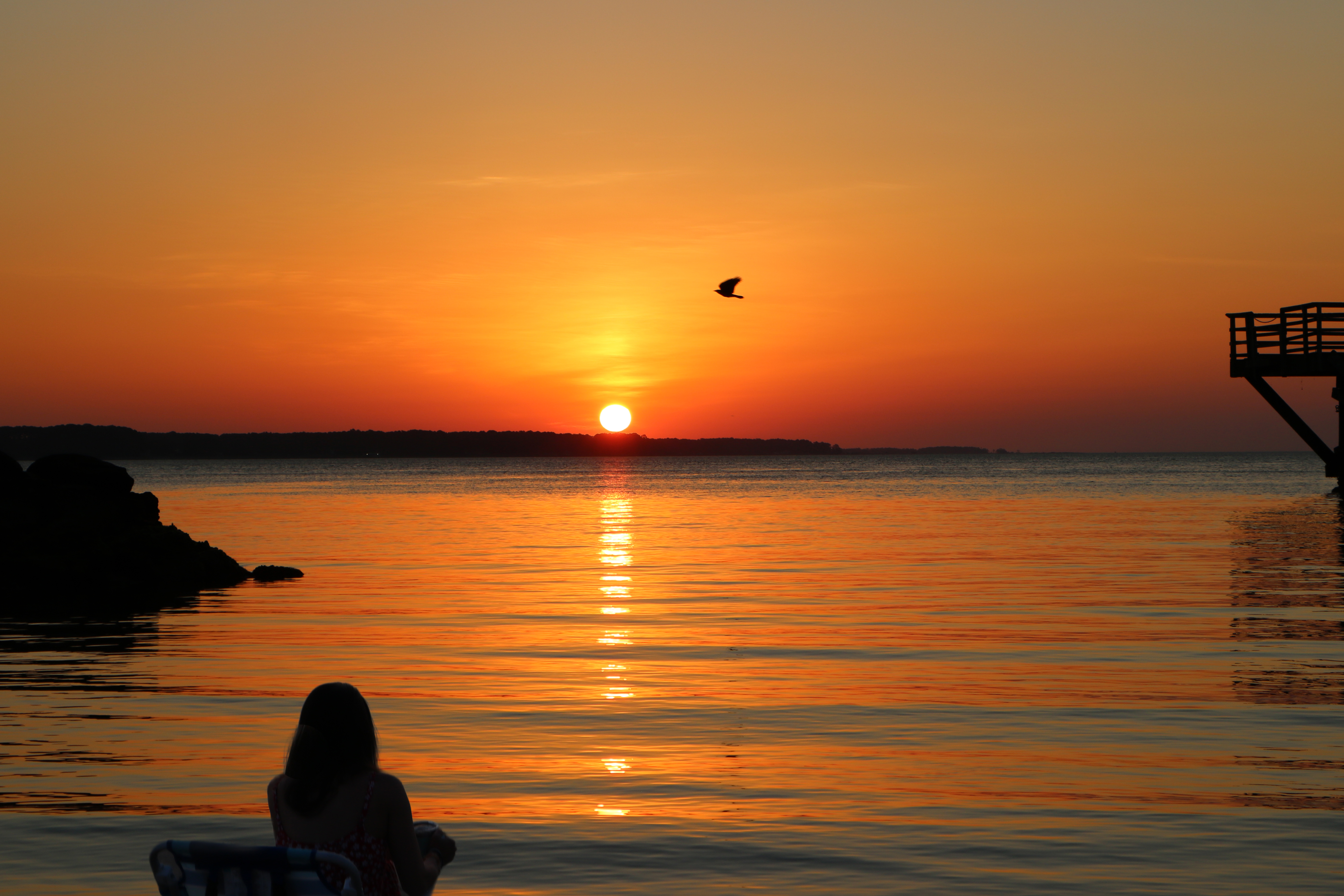
The sunrise is supposed to be the opposite of the prison.
Every morning, I drive to the Yorktown waterfront well before dawn. I sit in the stillness, toes in the sand. I capture the light and colors change over the river. I’ve been doing this for nearly a year and a half, since before the worst thing happened and after. On both sides of it, the sunrise has been the place where I get to be free.
There were mornings when the car showed up. It wasn’t in a place anyone could mistake for accidental. At the end of the one-way road in the parking lot I’d have to pass to leave. Then came mornings he couldn’t. I had been safe again. The river kept giving me God’s light at half-past five, and I had let myself believe the sanctuary was holding.
On Sunday morning, he was there.
I’m aware he’s in jail now and still equally aware there are other kinds of prisons. You can be trapped in a single night like it’s a room you can’t leave even when the door is open.
Tonight, I begin the part of trauma therapy that’s supposed to help me leave that room.
Last week, Dr. Lindsey explained that before we could start processing anything, we had to build a toolkit. Grounding techniques. Breathing. A safe memory to anchor in. The idea is that if therapy is going to take you back to unsafe places (even intentionally, even gently), you need somewhere safe to return to when the door opens too wide.
Some of the techniques were familiar. 5-4-3-2-1, the senses one I wrote about in my book. The breathing was the same work I do for speech therapy.
Then, she asked me to choose the memory. “Think of the last time you felt truly safe and at peace,” she coached.
I chose a morning on our honeymoon while watching the sunrise from a lifeguard tower on Coquina Beach in the Outer Banks. She had me cross my arms and tap alternately on opposite sides of my chest. My fingers settled on the clavicle bone, just above the heart.
“Remember what that calm felt like,” she said. “Describe it.”
Tears escaped before I could name why.
Part of the peace and calm in that memory was feeling loved and cherished and protected by the man beside me. The memory was unsafe now as if it had been pillaged, and I could not anchor in a moment I could no longer trust.
“I need to pick a different memory, Dr. Lindsey.”
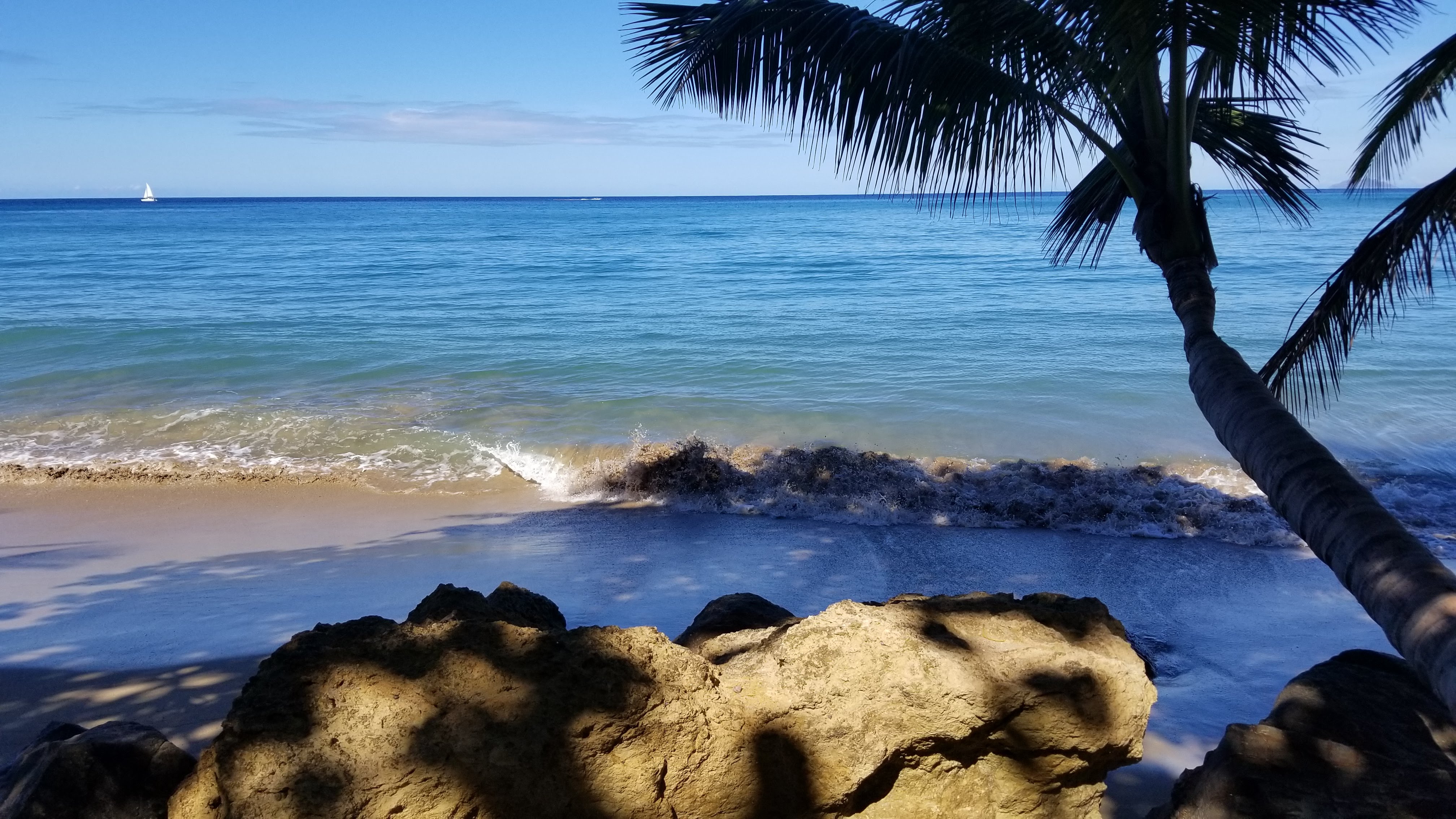
I chose Rincón, Puerto Rico, where my brother David took me for my fortieth birthday. He had been reading a book on the beach. I wandered up the shoreline a mile or so, alone, and I was aware of God’s presence in all of it. In the water, the sun, the palm trees, the sea glass. I wrote a poem under one of the palms. I was not loved by a person in that memory. I was loved by my Creator. And that is not a thing a person can take.
That is my anchor memory now.
Dr. Lindsey asked me to describe what calm felt like inside my body where the Atlantic Ocean met the Caribbean Sea.
I’m a writer who doesn’t run out of words easily. I can tell you anxiety tastes bitter like a coin in my mouth. I can describe the way fear stirs subtly and then overtakes, the way panic hijacks the stomach and the temperature centers, the way the body argues with itself when it can’t decide whether to flee or freeze. Trauma has a robust vocabulary. I know it well.
But peace? Words escaped me. I could settle into the memory, feel the warmth of the sun on my face, the breeze, the way my shoulders dropped. I could be in it; I could not, however, describe it.
A verse came to mind later that night as an answer. Philippians 4:7 says the peace of God that surpasses all understanding will keep your hearts and your minds. I think I know now what surpasses understanding means. Peace doesn’t speak in words. Rather, it garrisons the heart while the mind is still trying to find the words for what is happening.
Sunday morning at the pier, sitting in my car instead of on the shore waiting for resolution, I recognized the familiar, describable emotions at play. My heart was still racing, but I knew what to do. I crossed my arms. Bilateral taps of the clavicle. I breathed deep and slow, counting the way I’ve been taught.
Everything stripped away but me and my Creator.
The toolkit we built last week was tested before I ever sat in tonight’s chair. The grounding techniques worked. The Anchor held.
I know some people are skeptical of therapies like EMDR. The eye movements and the tapping can look strange. The science of it is essentially that you tax the brain’s working memory until a traumatic memory loses its grip; that can feel like a workaround for something prayer should be enough to fix.
I had that skepticism, too.
What’s true is EMDR won’t replace prayer or my reliance on higher power. It will simply use the body God made including the working memory He designed, the nervous system He wired, the bone above the heart that calms when you tap it, to bring me to the place prayer brings me. The taxing of the brain isn’t the opposite of stillness; it’s how some of us get to stillness. Be still and know that I am God is hard to do when your nervous system is still screaming in dysregulation. EMDR is supposed to help stop the screaming so that knowing can happen.
In Joshua 4, when the Israelites crossed the Jordan, God told them to take twelve stones from the riverbed and pile them on the other side, so that when your children ask in time to come,”What do these stones mean to you?”, they would tell the story of how God brought them through.
Anchor memories are stones, not deliverance. They are the markers we set up so when the waters rise again — and the waters always rise again — we can return to them and remember.
The perfect day in Rincón was not random. The walk on the shoreline was not random. The poem under the palm tree was not random. I did not know in Rincón that I would need that memory four years later, sitting in a car in a Yorktown parking lot, breathing slow, waiting for a deputy. The One who placed me there knew. He set the stone for me to find when I needed it.
Tonight, I’ll sit down with Dr. Lindsey for the first session of processing. I do not know what come.
I know what I have prepared. I know what the science says. I know the Anchor I am tethered to, and I know that Anchor cannot be moved.
The man who took my voice on February 1st cannot reach Rincón. He cannot put his hands on what happened between me and God on that shore. That memory is mine. I will go there tonight when the door opens too wide.
I pray he finds his own shoreline someday. That’s between him and God now.