This morning, there was supposed to be a blood moon.
A total lunar eclipse. The kind that turns the moon rust-red, the kind astronomers and poets wait for, and I’d been looking forward to it for weeks. I set no alarm because I was already awake at 2:30, already at the gym before most people’s alarms went off, already driving to the pier in the dark like I do every morning, expecting the sky to hand me something extraordinary.
It was raining.
Not dramatic rain or a storm worth writing about. Just a steady grey wash over the York River that turned the sky into a ceiling. No moon. No stars. No blood-red miracle. Just clouds and me standing underneath them in the cold, waiting for something I couldn’t see.
I stayed anyway. I always stay.
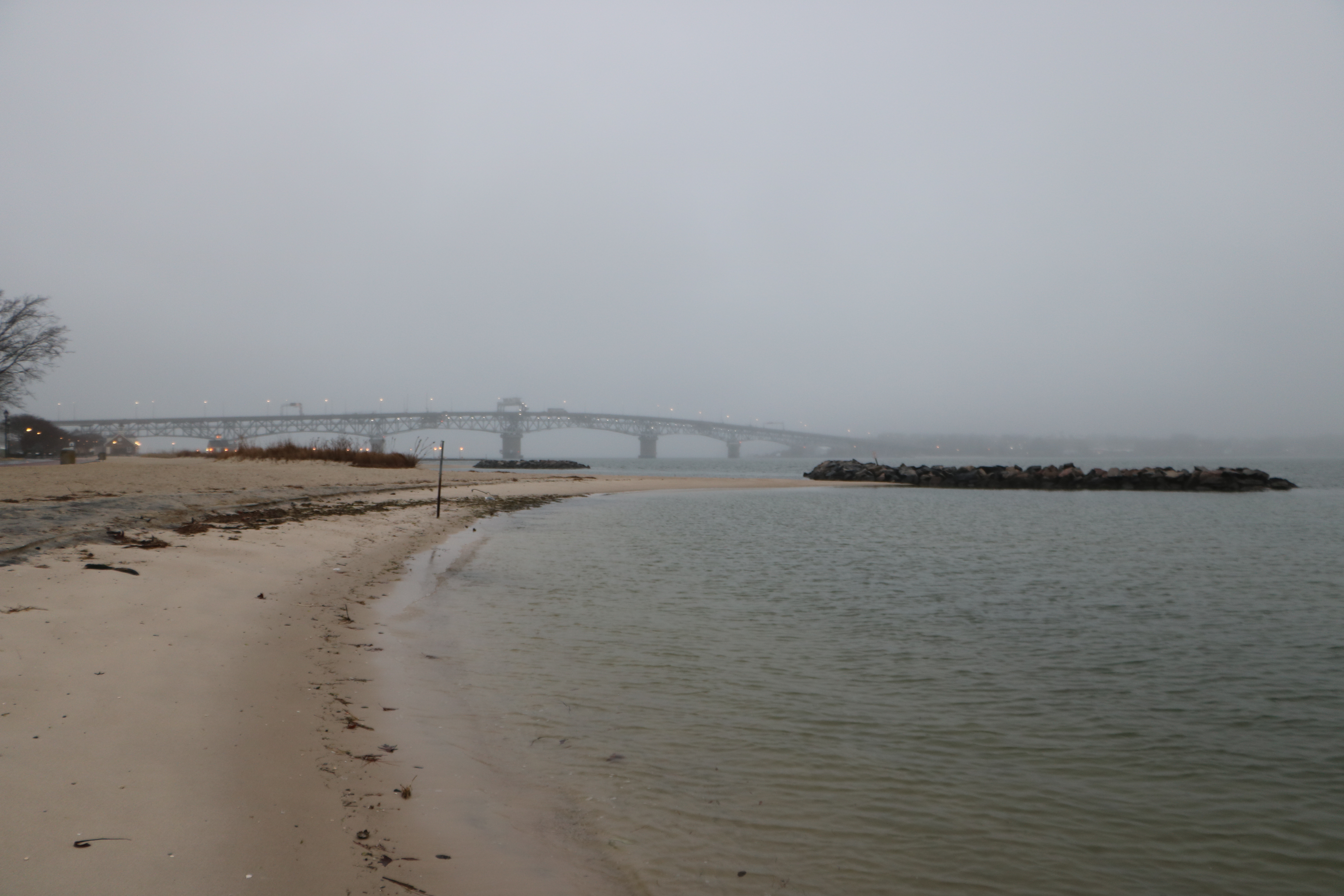
There’s a particular kind of faith required when you show up for something you were promised and the sky gives you nothing.
When you drive to the beach in the dark and the river gives you grey. When the extraordinary is definitely happening—the earth is passing between the sun and moon, the light is shifting, the heavens are performing—but you can’t see any of it. It’s still happening. You just can’t see it.
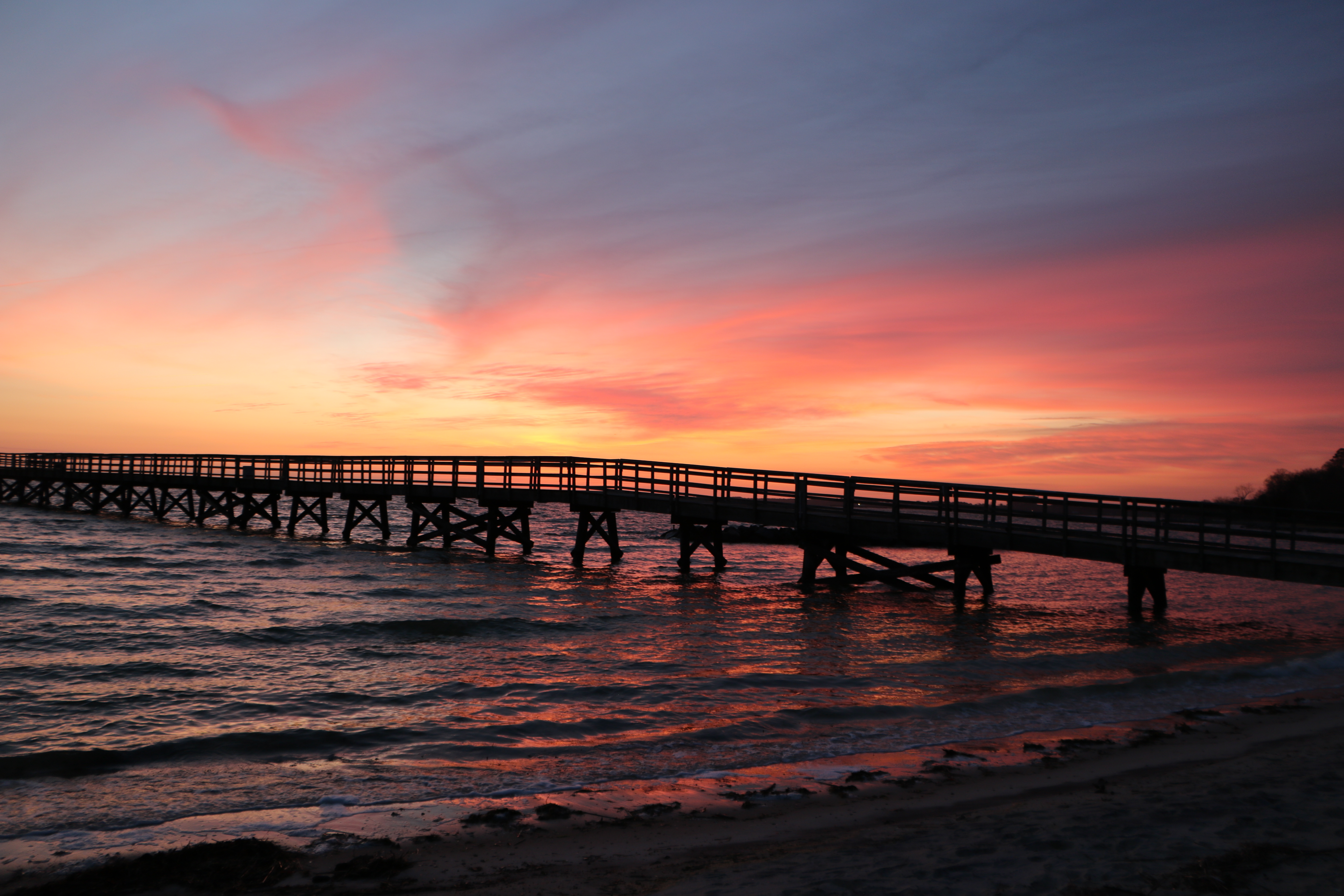
Last week, the pier gave me everything. Skies split open in pinks and golds so vivid they looked painted. I took a dozen of photos, each one more impossible than the last. The clouds still obscured the sun, but those mornings, faith felt easy. Of course God’s working; just look at that sky. Of course, there’s beauty; it’s right there.
But this morning, standing in the rain with my hood up and my hands in my pockets, I had nothing to photograph. No golden hour or fire on the horizon. Just the sound of water hitting water and a quiet so thick I could hear my own breathing.
I’ve been doing a lot of breathing lately. I’m on voice rest—a medical issue, not life-threatening, but stubborn and slow to heal. The doctor’s orders were blunt: stop talking. For a woman who teaches sixth graders all day, who sings in church on Sundays, who has processed every joy and grief of her life out loud, on paper, or into a microphone, that instruction might as well have been stop breathing.
I tried whispering my way through class. It works for the kids who already respect me. The others sensed an opening. I can’t blame them. A quiet teacher is an invitation to a twelve-year-old.
Sunday was tougher still. The sermon was from 1 Chronicles 29 about David dreaming up the temple he’d never get to build. His son Solomon would have that honor. Nevertheless, David poured everything into the vision. His worship was costly, personal, free, and joyful, the four qualities Pastor Colin used to define generational worship. The kind of worship that outlives you, passes through your children and their children into centuries you’ll never see.
I sat in that pew and I couldn’t sing. Not because I didn’t want to, but because my throat wouldn’t let me. He took that from me. And I don’t mean God.
But it wasn’t the silence that undid me. It was the word generational. David’s legacy lived on through Solomon. My mother’s faith lives on through me. My brothers’ children will carry the Palma name into future centuries. I end with me. The family tree that started with ancestors in Italy, that branched through my parents’ faithfulness, that I spent my thirties begging God to extend through a husband and dark-haired babies with olive skin. Does that branch stop here?
I didn’t plan for this. No little girl does. Still, here I am, forty-three, in a season I can’t fully share about, standing in a church I can’t sing in, listening to a sermon about legacy I may never leave.
I’ve been writing this blog for over a decade. It started as a writer’s discipline—showing up to the page the way I now show up to the pier. Over the years, it became something else. It became where I figured things out. Where I named the chill under everything. Where I confessed my faithlessness. Where I processed adversities I couldn’t speak about anywhere else.
This blog? This blog has always been my voice when my voice wasn’t enough. In my thirties, when I couldn’t say out loud that I was angry at God and now in my forties when my throat literally won’t cooperate and I couldn’t tell you everything anyway.
The blood moon happened this morning, and I know it did. Somewhere above the rain, the earth’s shadow crept across the moon and turned it red. Scientists confirmed it. Photographers in clearer skies captured it; my mom sent me pictures of it from the foot of her driveway in Syracuse. It was real and it was beautiful and I missed the whole show.
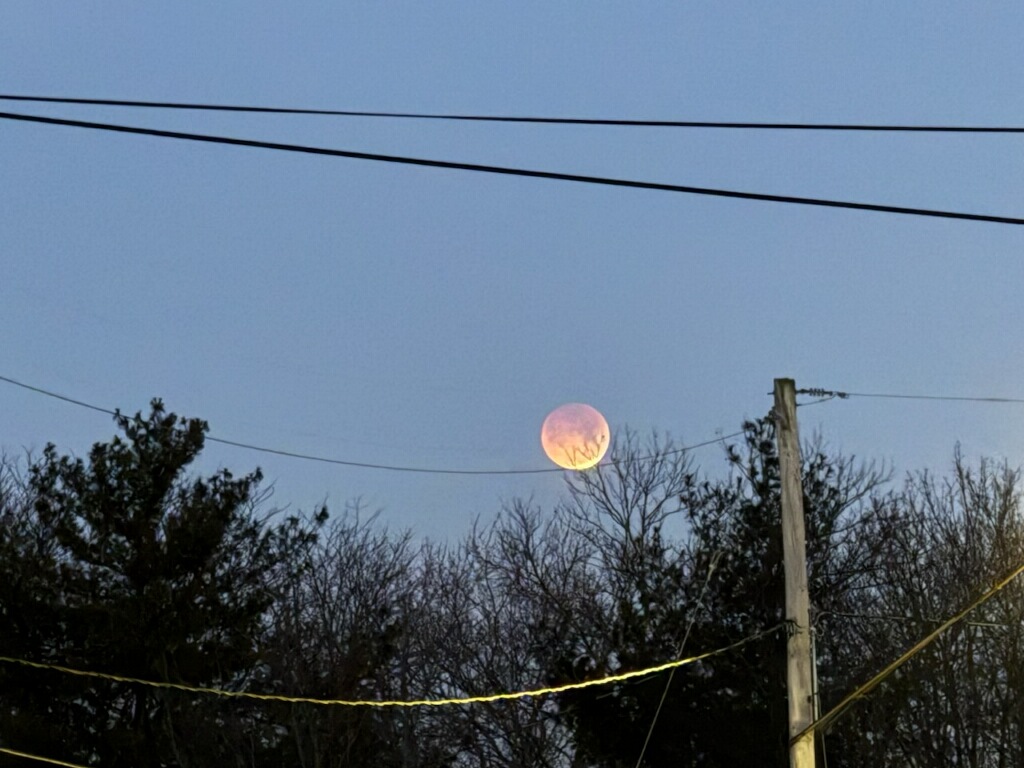
It’s teaching me something, though. I’m learning about what happens behind the clouds. That doesn’t need my witness to be real. Whether or not I saw it, the moon turned red this morning and God heard my worship Sunday even though I couldn’t sing it, just meditate on the words and lift my hands in surrender.
Maybe legacy isn’t only generational. Maybe it’s also the words you leave behind. The students you shaped. The blog posts you wrote in seasons you couldn’t speak about that someone read on a Tuesday night when they needed to know they weren’t alone. Maybe mine is the page.
I’ll get my voice back. The healing is happening, even if it’s slow, even if it’s behind clouds I can’t see through. God can. The clouds are my obstacle, not His. My mind can recite Psalm 139 without lips or a Bible. When I do regain my voice, the first thing I’m going to do is sing Hillsong’s “Cornerstone”.
Until then, I have this. The page, the pier, and the practice of showing up with whatever I’ve got left, even when what’s left is silence. Or silent worship.
In this lunar eclipse this morning, the earth got between the sun and the moon. Its shadow should have swallowed the light, but it didn’t. The moon turned red because the light bent around the obstacle. It found a way through.
I couldn’t see it, but the blood moon was there. I believe. For me, these days, believing what you can’t see is enough. Not because you’re strong enough to stand in the storm, but because the God behind the clouds has never once failed to bring the sun back up.

