Winter is coming. The thought alone used to bring fear and trepidation. Growing up in Syracuse with the greatest average snowfall in the nation, I imagine I survived winter months with the warmth my mother built into our household and schedule. The holiday event calendar was full. The Christmas lights, decorations, smell of cinnamon sticks simmering on the stove took us from one concert or party to the next; there wasn’t time or space to lament the weather.
When the Cold Crept In
As a college freshman braving the cutting winds on cloudy days crossing campus in Wheaton, Illinois in December, I remember simply being aware that the cold stayed with me. The grey chill crept under my skin and stayed until spring. It was the first of such winters for me, and after sophomore year, I transferred to Belmont University in Nashville and stayed a decade. We still had four seasons, but winter was shorter and milder. You’d never know I was raised in the snow capital of the country because I complain when the temperature dips under fifty degrees.
I didn’t recognize this as a pattern until much later in life, though. Every December, I’d get depressed, sometimes depressed enough to see a doctor and be prescribed an anti-depressant. I would sleep and eat too much, skip workouts to stream Netflix, and feel generally disconnected and uninspired. Every March, I’d come back to life when the earth came out of hibernation. Every summer, my spirits would soar. Come fall, I’d start to fear what had become the inevitable mood decline.
A Diagnosis, Not a Solution
I’d learned about SAD, Seasonal Affective Disorder, some years ago. It seemed to explain what I was experiencing, but it was more like a prison sentence than a solution. I accepted that I get down in the winter months, and I honestly believed there was nothing I could do about it. Once the days shorten, I just lose the best version of myself until April showers bring May flowers.
While I was researching and writing my book about bipolar disorder, I discovered it wasn’t uncommon for people living with this illness to experience moods that cycle with the seasons. And because my manuscript aimed to prove that a person living with bipolar disorder can live an intentionally good life, I approached my SAD situation differently. If, for example, I knew it was coming, could I sidestep the slide to decline entirely?
Chasing the Sun
There is hope for people who experience the winter blues. We can’t control the weather, but we can control our routine. Last winter, I was determined to beat SAD, or at least to tame it. I’d read about other people like me who lack an internal sleep-wake cycle, and studies showed that a circadian rhythm could be established by working with the sun’s schedule.
Oh, I was a night owl my first decade on the planet. Now, I go to bed early and rise to greet the sun. In my time at the pier, I’m still and mindful, aware of the greater plan God has in place for the sun’s trajectory and my own. There were hundreds of Saturday mornings I pulled the covers tighter about me, surviving the winter months by sleeping through them. In my opinion, that approach only fed SAD. And eating an entire bag of Doritos? Same.
Sure, we watch more movies as a family in the winter months, but while we watch, I keep my hands busy. I crochet gifts, work jigsaw puzzles, or build Lego flowers my husband gifts me. I’ve learned that the key to not falling deep into that winter depression is to maintain a consistent, healthy routine yearlong.
By Design
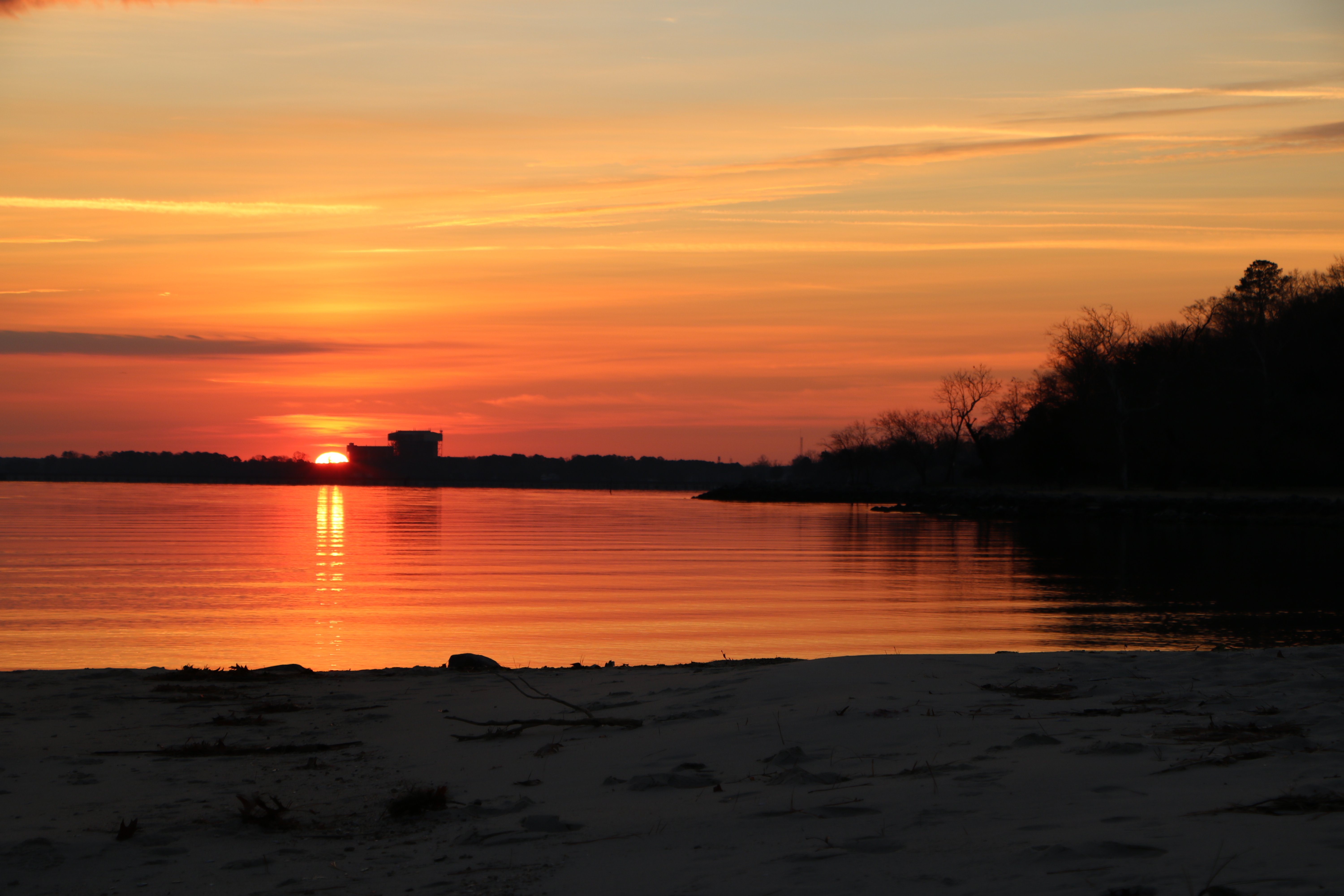
The sun doesn’t stay in one place, and neither do we, but it follows the same routine. The Winter Solstice is upon us. Believe it or not, by the end of this week, our days will start getting longer again—a minute at a time on either side of the sun, but it will add up. This morning, the sun rose over the factory, but within days it will reverse its path and eventually move west across the pier. Each day from now until June 20th, the day will get a little bit longer. With that extra light comes warmth and growth, true of the world and true of me.
I don’t think this is an accident.
The same God who designed the sun’s predictable arc across the seasons also designed me—a creature who needs light to thrive. He built the solution into creation itself: the promise that darkness never gets the final word. Even at its peak on the Winter Solstice, the night immediately begins to lose ground. The light always returns. It’s literally written into the rotation of the earth.
When I show up at the pier each morning, I’m not just chasing a sunrise. I’m participating in something God ordained from the beginning—the rhythm of light conquering darkness, day after day, season after season. He knew I would need this. He knew there would be winters in Syracuse and grey skies in Wheaton and seasons of the soul that feel endless. And He set the sun on its faithful course anyway, a daily reminder that the light shines in the darkness, and the darkness has not overcome it.
I am fearfully and wonderfully made—including the part of me that struggles when the days grow short. But so is the sunrise. So is the solstice. So is the slow, faithful return of longer days.
God designed the darkness to retreat. He designed me to follow the light. And every morning at the pier, I do.
 Writer's Growth