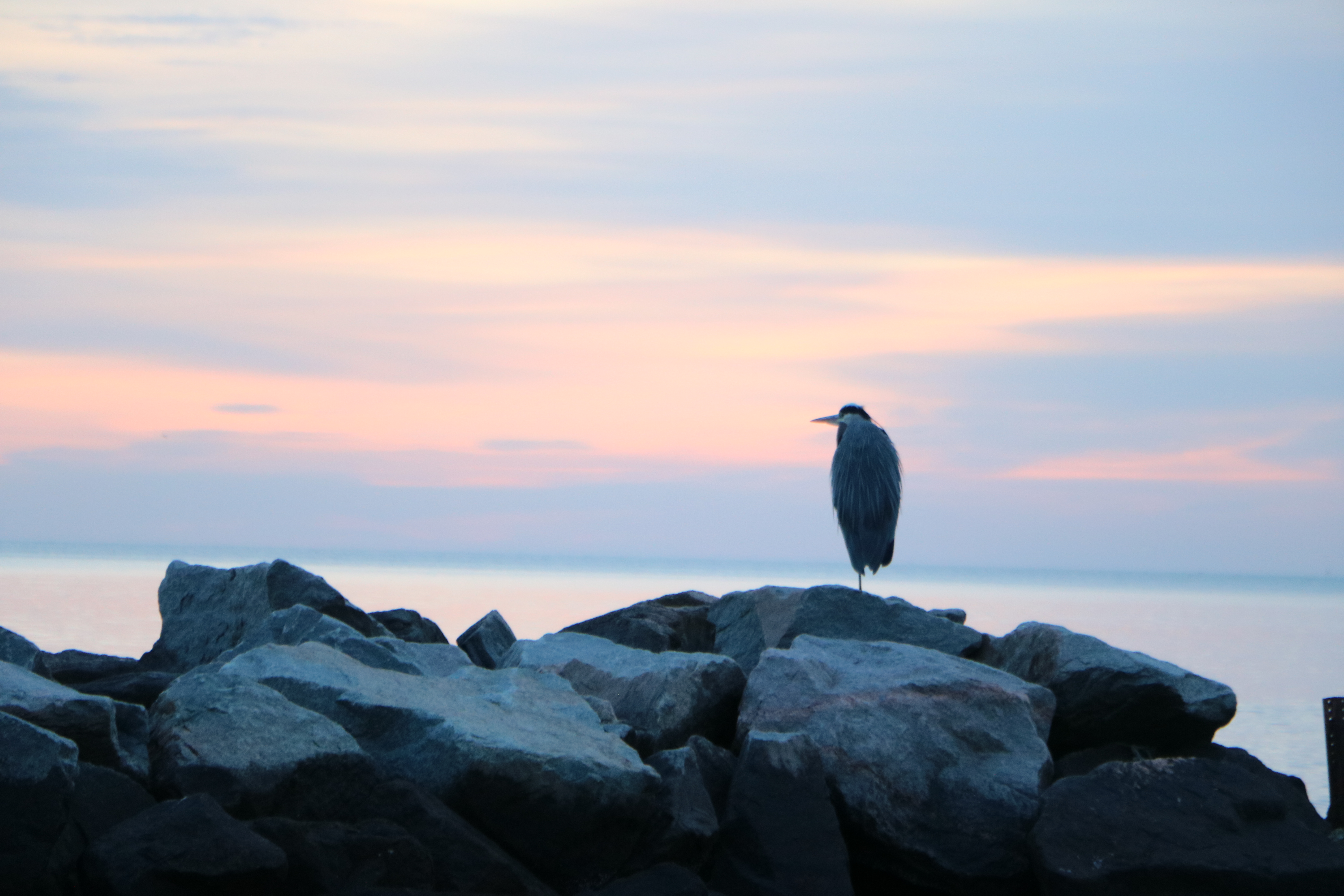
I went looking for my blue heron friend again this morning.
The snow fell this weekend, blanketing Virginia in a rare winter silence. Schools closed yesterday. Online learning today. The whole world seemed to shut down, but I didn’t miss a sunrise. Even with below-freezing temperatures, I bundled up and drove to the pier, searching the jetties and the shallows for that familiar silhouette.
He wasn’t there. Fourth day in a row.
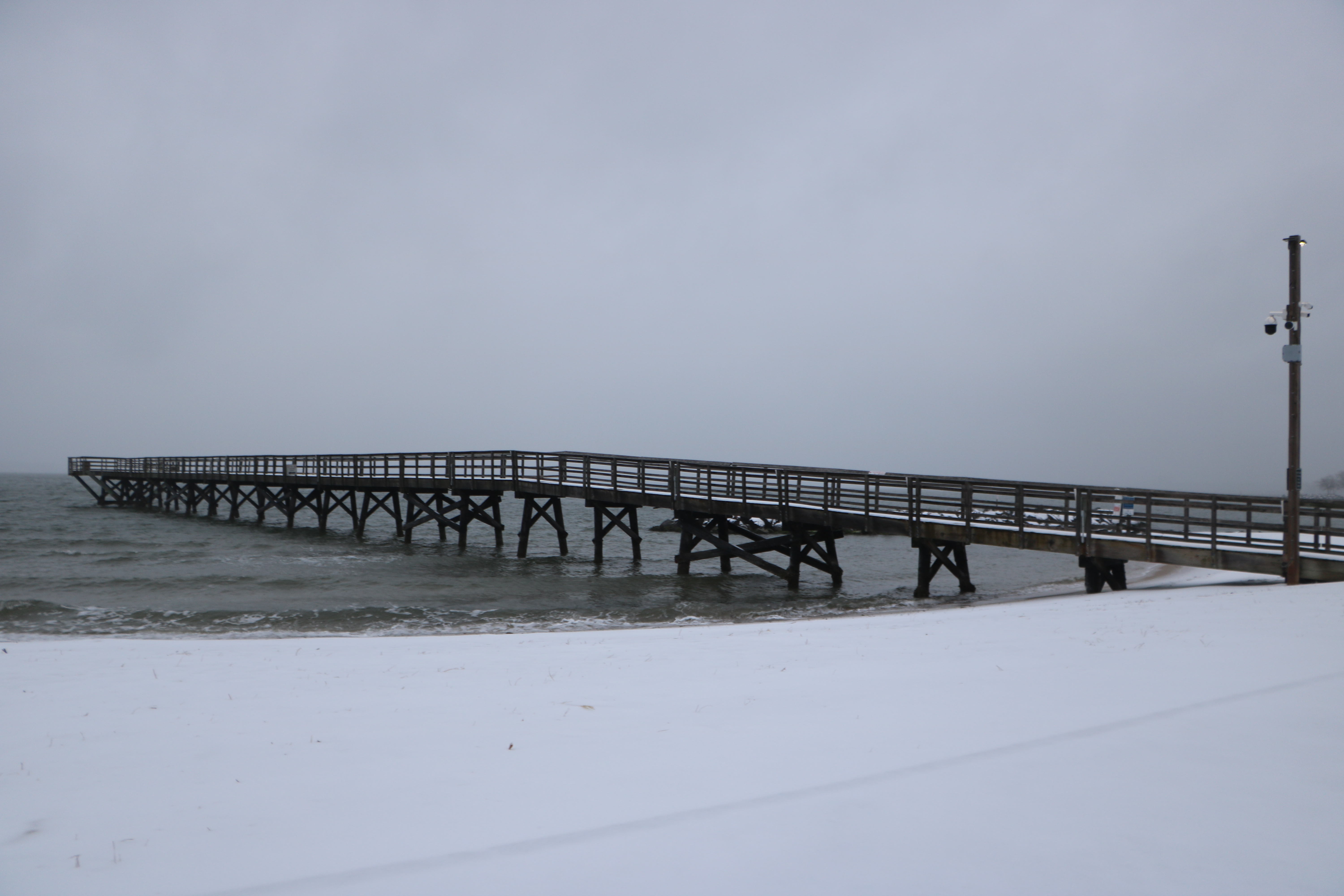
Maybe the cold drove him somewhere warmer. Maybe he’s fishing in calmer waters until the freeze passes. I don’t know where herons go when the world turns white, but I know I’ll keep showing up until he returns.
There’s something about showing up anyway—even when what you’re looking for isn’t there yet.
The First Advice
In October 2024, I emailed a family friend named Lydia Brownback. She’s a Christian author and acquisition editor—someone who decides which books get published and which don’t. I was nervous, vulnerable, asking her to look over my book proposal about living with bipolar disorder as a person of faith.
Her response was kind. It was also hard to hear.
“Most publishers don’t consider personal experience as a credible authority to address such intense topics,” she wrote. “They are leery of publishing individuals without advanced degrees in the subject. Additionally, most publishers consider accepting ‘personal experience’ books only from those with some name recognition/substantial platform.”
She called me a good writer. She told me to persevere.
And she was right. I didn’t have what publishers need. I still don’t.
I could have self-published then. Part of me wanted to.
But I would have published the wrong book.
The Fifteen Months Between
The book I had in October 2024 was called Coming Out: Fearfully, Wonderfully, and Bipolar-ly Made. It was about having the courage to be honest about my diagnosis. It was a good book—but it wasn’t the book I was meant to write.
Over the next fifteen months, something shifted. I rewrote the manuscript. I changed the title after my former professor Dr. Sam Storms—who taught me at Wheaton College, who now sits on The Gospel Coalition’s council—told me the original might confuse readers.
He also gave me an endorsement. He called the book “incredibly insightful and encouraging.”
But more importantly, I lived fifteen more months. And in those months, I discovered something I couldn’t have known when I started: sanctuary didn’t come from where I expected.
I’d believed sanctuary would come from having a family. From finding the right medication. From getting the right diagnosis. From being understood by the people who were supposed to understand me.
I was wrong about all of it.
My family is human—they sometimes work at cross-purposes to my mental health goals. Medication helps but doesn’t complete me. Diagnosis explained things but didn’t fix them. True sanctuary came from my relationship with God. Even in the storm. Especially in the storm.
That revelation changed my book. “Coming Out” became “From Shame to Sanctuary.” I wonder if I needed the original title during the writing of the manuscript, simply to be bold enough to write my truth. The courage to be honest transformed into the journey toward God as my refuge. I couldn’t have written that book in October 2024 because I hadn’t lived it yet.
The Rejections That Built It
I submitted to agents and publishers. I got rejections.
Church Publishing loved my vision but doesn’t publish memoirs. Steve Laube Agency couldn’t pull the trigger—platform again. Wipf & Stock offered to publish me, but I’d have to pay for typesetting. I turned them down. It didn’t feel right—like settling for a sunrise photo when you’re waiting for the real thing.
Herald Press expressed interest—not in my memoir, but in a different book entirely. A shorter, idea-driven resource for churches. “I would be very interested,” the acquisitions editor wrote.
I filed that away for later. I had a memoir to finish becoming.
The Door
Then came the email I’d been praying for.
Ryan Pazdur—VP and Publisher of Zondervan Reflective, the man who launched the imprint, who’s worked with Timothy Keller and Pete Scazzero—reached out personally. Sam Storms had connected us. Ryan invited me to send my proposal directly to him.
I spent days polishing my cover letter. I positioned my book carefully for his catalog—books that tackle hard topics in the church while remaining theologically grounded. I explained that I’d turned down Wipf & Stock because their catalog would bury my story among church resources. I told him the person Googling “Christian bipolar disorder shame” at 2am would never find it there.
I hoped Zondervan might be different. I hoped this might be the door.
The Same Advice
Today—January 27, 2026—fifteen months after Lydia’s email, Ryan Pazdur sent his response.
“The writing is good and you have a worthwhile message to share.”
My heart leapt.
“However, the book is not a good match for us.”
He listed the reasons: They rarely publish memoirs. They need broader endorsements. The potential audience is small. They can’t market without the author’s existing connections and platform.
And then, gently, he confirmed what Lydia had told me fifteen months earlier: “I think our approach would be fairly similar. The most likely way to reach the target audience is through pastors and ministry leaders.”
The same advice. Fifteen months apart. From an acquisition editor to a VP publisher.
Platform. Name recognition. Established connections.
They weren’t wrong. Either of them. I hadn’t earned the trade publishing route. I don’t have what their business models require, and I understand why. Publishing is a business, and they need authors who can move books. That’s not a flaw in the system—it’s just the reality of how it works.
What I Learned
I sat with that email for a long time, letting the sting settle.
And then I saw something I might have missed if I’d been too busy feeling sorry for myself: I needed those fifteen months.
If I had self-published after Lydia’s advice in 2024, I would have published a book about coming out of the shadows. A book about courage. A good book.
But I wouldn’t have published a book about sanctuary—because I hadn’t found it yet. Not really. I was still looking for it in family, in treatment, in human understanding. I hadn’t yet discovered that true sanctuary comes from my relationship with God, not from people or circumstances finally cooperating with my mental health goals.
The rejections didn’t just delay my book. They made my book.
Every closed door gave me more time to live the story I was trying to tell. Every “not right for us” pushed me deeper into the journey from shame to sanctuary. Every month of waiting refined the message into something truer than what I started with.
The Path Forward
I’m going to publish this book.
Not because the gatekeepers were wrong—they were right. Not because I’ve earned something I haven’t. Not in defiance of an industry that told me the truth about what they need.
I’m going to publish this book because it’s finished becoming what it needed to be, and there are people who need to read it. The person Googling “Christian bipolar disorder” at 2am. The church member hiding their medication. The believer who’s been told to just pray harder.
I have hundreds of faithful blog subscribers who’ve followed my journey for eleven years. I have a voice at NAMI and DBSA. I have eighteen years in the classroom and four thousand students. I have a story that refuses to stay hidden.
It’s not a platform that would work for Zondervan. But it might be enough to reach the people God has prepared for this message.
Showing Up Anyway
Tomorrow morning, I’ll be back at my sunrise spot, photographing the pier, making my requests known before God. He answered a prayer today. Not the way I was hoping, but He answered.
The forecast says we’ll return to normalcy… school bells, ice melting into memory. I’m hoping my blue heron friend will be back too, standing in his usual spot, faithful to the sunrise even after the freeze.
He doesn’t show up because he’s earned the right to fish there. He shows up because it’s what he was made to do. And when the cold comes and the world shuts down, he doesn’t stop being a heron. He just finds another way to keep fishing.
Maybe that’s what this is. Not defiance. Not settling. Just faithfulness to what I was made to do, even when the path looks different than I imagined.
Fifteen months ago, I hoped a publisher would validate my story.
Today, I’m trusting that God already has.
Same story. Same writer. Different ending.
Great are You, Lord.
 Writer's Growth