A series title swap was necessary. It got attention, but it was misleading. I got Tony to marry me by becoming someone who’s easier to love; this series applies to anyone trying to get and keep healthy relationships with spouses, children, parents, and friends, too.
Tony came with a teenage girl, after all, and it was in that mother-daughter dynamic where we saw the most urgent place for change: I needed to get off the codependent roller coaster ride permanently.
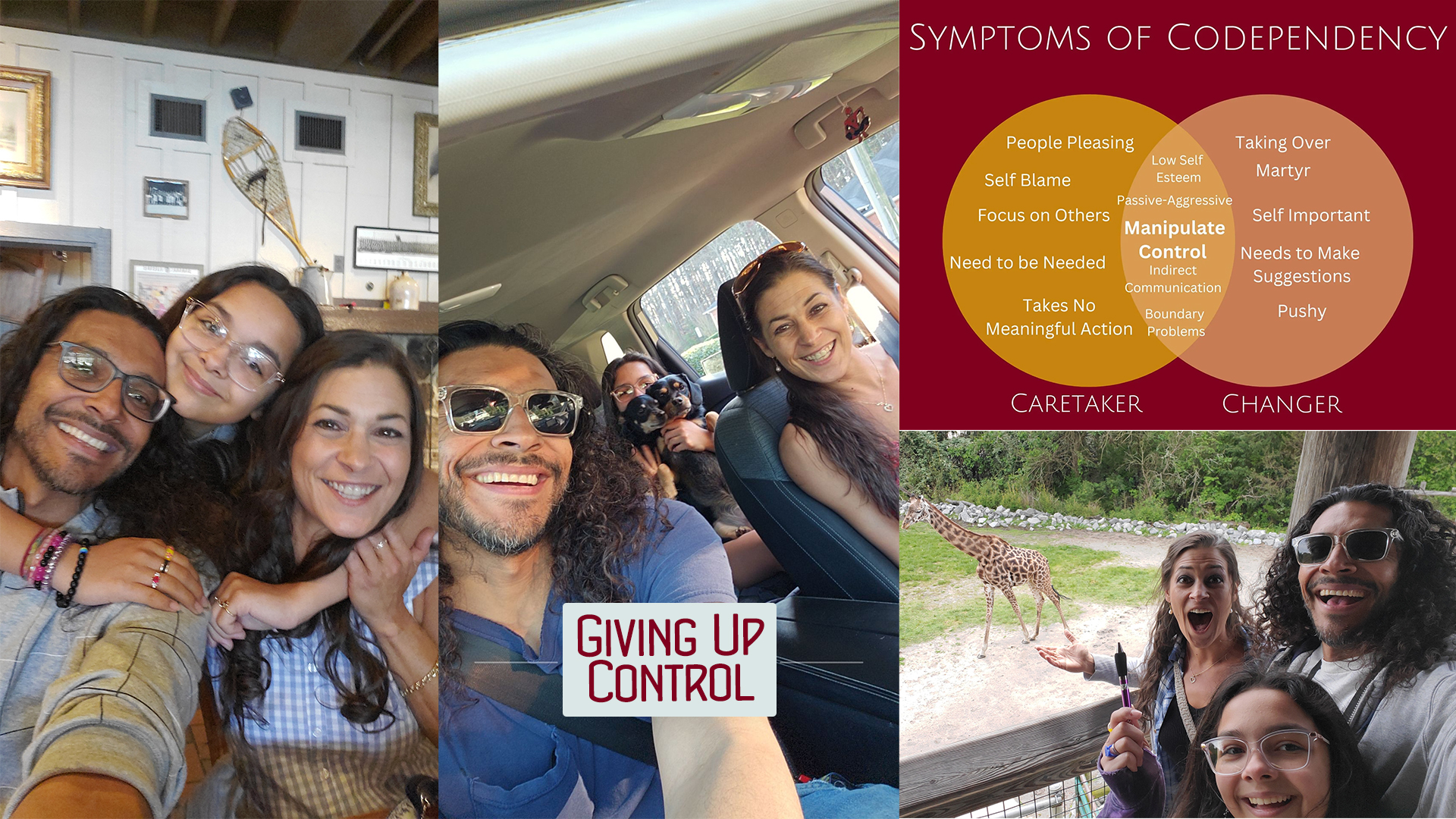
Codependency has competing definitions these days, but here we’ll embrace a broad one as a dysfunctional relationship pattern resulting in controlling behaviors. Author and relationship expert Melody Beattie defines it in the way I best see myself: “A codependent person is one who has let another person’s behavior affect him or her and who is obsessed with controlling that person’s behavior.”
I never saw myself as codependent, rather fiercely independent. I wasn’t controlling, just organized. My stepdaughter is navigating adolescence with ADHD. When we first started dating, l was quick to take over management of her schedule, giving her an afternoon routine that set her up for success at school. I knew Calista would benefit from that order and structure.
I changed her diet, too. No more Fruit Loops or canned ravioli, no hiding snacks in her room, no binging entire bags of potato chips. Again, I knew Calista would benefit, in the long run.
Within just months of dating Tony and Calista, I created a chore chart of epic proportions, the “Calista’s Got This” board, with lists of daily and weekly chores to help her remember and stay on track. I just knew, overall, this system would make things easier in the house.
While my intentions were good and perhaps outcomes likewise in these examples, when I was hit with a physical illness last winter, my obsessive relationship with control got the spotlight. I was supposed to take it easy, but I kept doing the things I normally did to keep things running smoothly. By the time dinner was served, my body was screaming. Seeing me in pain upset Tony, and he’d yell at me for not asking for help.
I could not ask for help because that meant giving up control. If I let Tony and Calista handle the chores in my domain, they wouldn’t do them right. The laundry would get done, but it might sit in the dryer for a couple of days. We’d have dinner, but there would be no greens. Whatever was my job before I got injured, I was obstinate to maintain the same standard of care as before.
It didn’t get better last winter. Things went on that way for a month or so until I improved physically. I saw nothing wrong with working instead of resting. I prioritized Calista’s wellbeing over my own. Isn’t that what a parent is supposed to do? If I rested, everything would have fallen apart.
Yes, at that time, if I had rested, everything would have fallen apart because I was controlling everything in our orbit. I had so structured and arranged our lives that my future husband and daughter were dependent on me, needed me, to keep things running smoothly. It never occurred to me that I placed value on being indispensable to others.
I had surgery two weeks ago, and as usual, I didn’t take it easy. A week later, I was making dinner when blood began pouring from the incision site, splashing up from the kitchen tiles splattering my legs like paint. Tony rushed me to the ER. After several hours getting the bleeding under control, I had to essentially restart the healing process.
Tony stayed home with me the next day to force me to rest. Calista got herself ready and on the bus by herself. All week, I rested. My husband bought me the Lego bonsai tree build as my only job, something to keep me horizontal. I did not cook for anyone. I did not one load of laundry. I did not make my husband’s lunch. I did not drive to school when Calista forgot her flute, and she lost participation points in band.
At the end the week, I wasn’t a martyr; I was beloved. Nothing fell apart while I was recovering. I was proud of my family for stepping up and forcing me to heal. And I’ve never heard my husband express quite so much gratitude for the daily matters I handle that typically go unnoticed.
Last winter, I ignored my body’s needs in the spirit of self-sacrifice, but my inability to ask for help reflected an inner heart posture that my way was the right, best, and only one. The dysfunction I propagated within our family unit didn’t leave room for others to be right about anything.
Bumping up against Tony and Calista in everyday life, it became clear to me that my feelings were externally dependent up on them. Based on what they did or did not do, my mood changed. Tony called me out because that mindset puts too much pressure on the people I love.
The passive aggressive undercurrent of a codependent relationship breeds resentment, marked by guilting and gaslighting, and before we know it, we can belittle our loved ones straight out of our lives. I had to change the cycle before I pushed Tony and Calista away, too.
I thought that doing more than my share all the time was serving others, but when forced to stop running the show and rest, I had to face the need to be in control that powered my giving.
It is in my nature to control Calista’s afterschool schedule, her diet, even her wardrobe, because I believe I know what’s best for her. I make changes that produce results and use that as further evidence that I know best, and that she should trust me.
But if I’m always right and my way is always best, then Calista is growing up in a world where she is always wrong, where she can’t trust herself to know what’s best, where she’s constantly second guessing her choices and behaviors. If I’m always right, then Calista’s a ball of anxiety, walking on eggshells, waiting for me to tell her how she could have done it better.
On election day, we best see the intersection of groups of people who hold differing views. We align on the left or right, believing what we believe to be true and right and good. Others align in opposition to us, believing what they believe to be true and right and good. We vote on election day because we know others believe, just as passionately as we do, that we’re voting for the wrong person. At least, we are aware there are two sides.
Our nation predicates itself on the existence of these bookend parties, these different beliefs on what is right and best, to keep balance. Perspectives collide and compromise wins. In a relationship, it should be the same. No one person should always be right or know what’s best. Sometimes, it takes giving up control to see that another’s way works, too.
Being expected to do life my way caused a lot of anxiety for Tony and Calista. I can recognize that stress best by the absence of it now. Giving up control improves the quality of our lives. It doesn’t make me less of a woman to be wrong sometimes, either. It just makes me easier to love.
Enjoy this read? Leave a *Like* here or on Facebook. Subscribe and share.
Follow on Instagram or Twitter @laurajoyramos, elevating social discourse on an intersection of mental health, wellness, and relationships.
See you back next week for our next secret to getting broken people (like me) into healthy relationships.
 Writer's Growth